


By Justina Jarrige|Senior Marketing Specialist
Best time to sail: November to April (dry season)
Best value: May to early June (shoulder season)
Avoid: August to October (in the Northern Caribbean)
Best places for summer charters: The southern Caribbean - Grenada, the Grenadines, Trinidad and Tobago
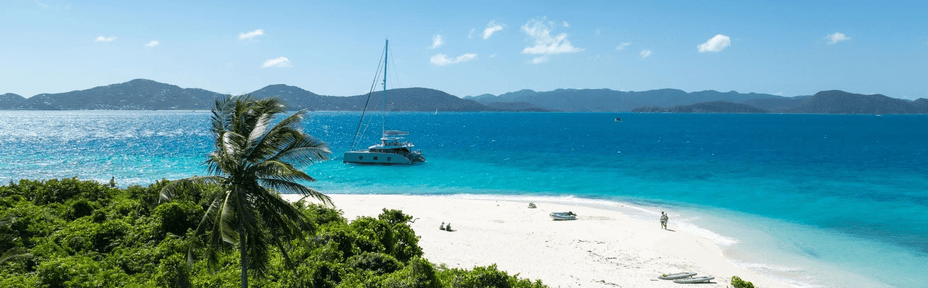
The anchor goes down in 18 feet of water, so clear you can watch it settle on the sand. The crew ties off the stern line to a palm. Somewhere in between St. John and Tortola, with the trade winds still humming and the sun two hours from setting, nobody is in a hurry to be anywhere else.
This is what happens when you time your Caribbean sailing trip right.
The best time to sail to the Caribbean isn't a single month or even peak season. It depends on where you're going, what conditions you can handle, and how much flexibility you have on dates.
In this article, you’ll learn:
How the Caribbean’s two seasons differ
The best months to sail
Which islands sail best and when
Typical wind and water conditions to expect
Quick Guide: Best Time to Sail to the Caribbean
Season | Months | Conditions | Best for |
Peak/Dry Season | November - April | Clear skies, steady trade winds, calm seas | First-timers; Travels to the BVI or St. Martin |
Shoulder Season | May - June | Fewer crowds, lower prices, light rain | Budget charters; Travels to the Southern Caribbean |
Hurricane Season (Risky) | July - October | Higher rainfall, storm risk in northern islands | Trips to the Southern Caribbean only (Grenada, Trinidad) |
The Caribbean Has Two Seasons - And They’re Very Different
Unlike Europe or the Pacific, the Caribbean doesn't split into four seasons. It splits into two: dry and wet.
Both affect your trip in completely different ways, and knowing which one you're sailing into changes everything.
The Dry Season (November to April)
The dry season runs roughly from November to April, and this is when the Caribbean is at its most reliable.
The trade winds blow consistently from the Northeast at 15 to 25 knots. Rainfall is low, seas are generally calm, especially in sheltered Island passages. Passages tend to be comfortable, with modest swells and good visibility.
This is peak season for a reason: sailing conditions are reliable.
However, the tradeoff is price and crowds. Charter rates are higher, popular anchorages fill up faster, and the best yachts get booked months in advance.
If you’re planning to travel during this window and have a specific yacht or itinerary in mind, plan early.
The Wet Season (May to October)
The wet season gets a bad reputation, but it's not a write-off. Rain tends to come in short, heavy bursts versus all-day gray skies.
The temperature stays warm, the Caribbean Sea stays beautiful, and you'll share anchorages with fewer boats. Trade winds also weaken during this time.
Wind becomes less stable, squalls arrive with less warning, and seas can build quickly during storms. Sailing isn’t entirely impossible, but it requires more flexibility in your itineraries.
Prices drop noticeably during the wet season because hurricanes become a real concern from June through November. Hurricane risk profiles change significantly across the Caribbean, making destination choices and weather windows harder to predict.
We do not recommend booking during this window. But, if you do plan to sail the Caribbean between June and November, a trip down the southern Caribbean is a safer option.
What You Need to Know About Hurricane Season

Hurricane season tends to discourage many travelers from choosing to travel to the Caribbean between June and November—and rightly so.
The risk is real, and conditions shift across the region in ways that aren’t easy to predict. That doesn’t mean there are hurricanes every week; it means the conditions are there for storms to form, and where you sail matters as much as when.
Here’s what you need to know if you're planning a crewed charter to the Caribbean during hurricane season.
When Hurricane Season Starts and Peaks
Hurricane season officially runs from June 1 through November 30, but the risk isn't evenly spread across those months.
Activity tends to ramp up from August, peaks in September, and starts to ease through October and November. June and early July are usually quiet; these are historically some of the lower-risk months of the entire season.
Since it’s not peak season, you’d be able to get yacht charters at a lower price, and there’d be fewer visitors, too.
The Southern Caribbean: A Safe Bet During Hurricane Season
The Caribbean is a large body of water, so storm tracks don't cover it all equally.
The southern Caribbean, in particular, sits below the main hurricane belt. Islands like Grenada and Trinidad and Tobago sit outside the typical storm track. Many charter operators base their boats here during the summer months because the risk is lower.
If you're set on sailing the Caribbean during hurricane season, go to the southern Caribbean.
Countries in the northern Caribbean, like the Bahamas or Virgin Islands, carry more risk during hurricane season.
Best Months to Sail to the Caribbean

Caribbean Weather and Sea Conditions by Month
The Caribbean Sea stays warm year-round, but air temperatures, rainfall, and sea conditions change across the seasons.
Here’s what to expect month-to-month:
Month | Ave. High | Sea Temp | Rain Pattern |
November | 81.5°F (27.5°C) | 82°F (28°C) | Wet season ends |
December | 79.5°F (26.5°C) | 81°F (27°C) | Dry season starts |
January | 78°F (25.5°C) | 80°F (26.5°C) | Dry season |
February | 78°F (25.5°C) | 79°F (26°C) | Driest season |
March | 79.5°F (26.5°C) | 79°F (26°C) | Dry season |
April | 81.5°F (27.5°C) | 80°F (26.5°C) | Dry season |
May | 83.5°F (28.5°C) | 81°F (27°C) | Transition to wet |
June | 84.5°F (29°C) | 81°F (27°C) | Wet season/Hurricane season starts |
July | 86°F (30°C) | 82°F (28°C) | Wet season |
August | 86°F (30°C) | 82°F (28°C) | Peak Heat |
September | 86°F (30°C) | 83°F (28.5°C) | Wettest Season |
October | 84.5°F (29°C) | 83°F (28.5°C) | Wettest month |
Underwater visibility tracks with rainfall. Dry season months offer 20 to 30 meters of visibility for snorkeling, while wet season runoff can reduce visibility near coastlines and river mouths.
November to January: Early Peak Season
The Caribbean starts settling into its best sailing season in late November. Hurricane season is winding down, trade winds are picking up, and you start to see more consistent weather across the region.
December and January are the perfect time to sail the northern Caribbean after months of avoiding it. Temperatures on the water hover around 27-29°C (80-84°F), which is comfortable even at night. Expect good wind, low rain, and crowds starting to come because of the holidays.
Popular anchorages like the Bight in Norman Island and the Bitter End in the British Virgin Islands (BVI) begin to fill up, and holiday-themed yacht charters - Christmas at sea, New Year’s Eve in St. Barths - are some of the most sought-after weeks of the year. If you’re planning a festive charter, book well in advance.
February to April: The Sweet Spot
February to April is the best time to sail to the Caribbean if you want it all: dry weather, calm seas, and enough warmth to swim off the back of a boat daily.
The Caribbean sailing community treats February through March as the ideal window, with consistent trade winds, minimal rainfall, and clear underwater visibility for snorkeling. But this does bring in more crowds.
Late April is still excellent, but you’ll start to notice the weather starting to get a bit wet.
May and June: Shoulder Season
May and June are interesting times to travel. It’s considered shoulder season, so the crowds thin out, prices start to ease, yet the weather remains good most of the time, especially in the first half of June. There’s more rain than in February or March, but the weather’s the kind that rarely ruins a week at sea.
If you have more flexibility with dates, travel during the shoulder season. The southern islands are especially good this time of year.
July to October: Proceed with Caution
July to October is peak hurricane season, and it’s especially risky to travel in the northern Caribbean. Avoid sailing to the BVI, St. Martin, or the Bahamas during this window.
However, in the southern Caribbean, sailing continues in Grenada and the Grenadines.. Conditions aren't at their peak, but they're manageable.
If you decide to go sailing during this time, opt to sail to the south.
Best Caribbean Islands to Sail - and When to Go
Caribbean destinations do not have the same sailing windows.
Here’s how each of the main regions fares:
British Virgin Islands (BVI)

The British Virgin Islands is one of the most popular sailing destinations in the world, and for good reason. With protected channels, short passages between islands, and reliable trade winds, it’s a near-perfect setup.
The best time to sail the BVI is December through April. Outside that window, particularly August to October, most charter operators move their fleets out of the region.
The BVI also tends to book fast during the holiday season (late December to early January), so if you want a specific yacht on a specific week in the BVI, book at least 6 months ahead.
The Grenadines and Southern Islands

The Grenadines, which stretch from St. Vincent down to Grenada, are among the most beautiful sailing grounds in the Caribbean.
Choose from Tobago Cays, Mustique, Palm Island, or Bequia-each is different and worth the trip. And because they sit in the southern Caribbean, you're able to sail to them year-round.
The dry season (November to April) is the most comfortable time because of steadier winds and less rainfall, but don't count out the shoulder season.
The islands are less busy, prices are lower, but the sailing experience is still excellent.
St. Martin and the Northern Islands

St. Martin sits at the heart of the northern Caribbean and is a hub for bareboat and crewed charters heading through the Leeward Islands.
Sailing in the north through Anguilla, St. Barths, Saba, or Sint Eustatius is rewarding, with its mix of calm protected waters and more exposed passages.
If you want to visit this region, stick to December through April. During this time, the weather is reliable, the anchorages are beautiful, and trade winds give you textbook sailing conditions.
Caribbean Festivals and Events to Plan Your Charter Around

Timing your charter around a regatta, carnival, or food festival turns a great trip into an unforgettable one.
The Caribbean has a packed calendar from November through May, with the regatta circuit, carnival celebrations, and music festivals overlapping the dry season.
January to March: Regatta and Carnival Season
The early months of the year are when the Caribbean sailing scene is at its busiest. Here are some events to check out:
Grenada Sailing Week (January): Kick off the Caribbean racing season with this intimate regatta held against the backdrop of Grenada and Carriacou. It’s an excellent excuse to base your charter in the southern Caribbean during what’s already a great time of the year to be there.
Trinidad Carnival (February or early March): The biggest carnival in the Caribbean happens in February or early March, depending on when Lent falls. If you've never experienced a real Caribbean carnival, this one’s not to be missed. Think steel pan music, calypso, and costume parades. Charter guests often anchor in nearby waters and fly in for the main events.
The St. Maarten Heineken Regatta (early March): This event combines serious racing with one of the loudest party scenes in the regatta circuit. So even if you're not racing, it’s a fun time to be on the island-live music, crowded marinas, and a great atmosphere across both the French and Dutch sides.
St. Barth's Bucket Regatta (late March): Arguably the most exclusive event on the calendar, the St. Barth's Bucket Regatta draws in a glamorous crowd there to watch superyachts compete.
April: Sailing Events Season
April is when the regatta circuit hits its peak, and Antigua is at the center of it all.
The BVI Regatta and Sailing Festival (late March to early April): It’s the BVI’s flagship sailing event, held in Nanny Cay on Tortola. Expect three days of racing, live music, and food across the marina.
The Antigua Classic Yacht Regatta (mid-April): If there’s one Caribbean sailing event you shouldn't miss in April, it’s this. Get a chance to catch vintage wooden yachts racing in English Harbour-some over a hundred years old.
The atmosphere on shore is relaxed and historic, with rum punches, jazz, and a strong sense of tradition.
Antigua Sailing Week (last week of April): This event happens immediately after the Antigua Classic Regatta, closing out regatta season.
Expect five days of racing, legendary beach parties, and the full force of the Caribbean sailing community. English Harbour is one of the best places to be during this time, even if you aren't on a racing yacht.
St. Maarten Carnival (April): Watch out for parades J’ouvert celebrations, and live music across the island. It overlaps with peak sailing weather, making April one of the best months to charter in the northern Caribbean.
May to August: Southern Carnival Season
By May, the regatta circuit winds down, but the Caribbean does not get quiet-all because the Carnival season moves south.
The Saint Lucia Jazz and Arts Festival (May): Despite May being a quieter time on the island, the jazz festival is one of the best music events of the region and should not be missed. Insider tip: Performances run across the island, but for a better view of the sunset shows, anchor at Marigot Bay.
Vincy Mas (late June to early July): Vincy Mas in St. Vincent and the Grenadines is the biggest cultural event in the southern islands. Soca, mas bands, and parades -all great reasons to be in the Grenadines that time of the year.
Crop Over (July to early August): Crop Over in Barbados is the island’s answer to Trinidad Carnival. The Grand Kadooment parade closes it out and is genuinely unforgettable.
Spicemas (early August): Spicemas in Grenada is the cultural highlight of the summer. With parades filling the streets and J’ouvert celebrations starting before dawn, the whole island comes alive for a week. Drop by the Grenadines and you’ll see the southern Caribbean at its most vibrant.
Ber Months: Holiday Lead-ins
The end of the year brings smaller, more local events-the buildup to peak season.
The World Creole Music Festival (late October): Artists from all over the Caribbean meet in Dominica for three days of zouk, kompa, and bouyon. Dominica isn't a typical charter stop, but if you're already nearby, it’s worth the detour.
The Anegada Lobster Festival (late November): This festival marks the unofficial start of the BVI charter season. Imagine Anegada’s spiny lobster being grilled all over the island during the best time of year for sailing? It’s definitely a recipe for a fabulous time.
Overall, the holiday season from mid-December onward, is when the Caribbean is at its busiest and most festive. New Year's Eve in St. Barths is famously over-the-top, and Christmas charters in the BVI book out months in advance.
If you want to be on the water during this time, plan early.
Contact Ritzy Yachts today.
Sea Axis

125 ft | Sleeps 12 | $105,000-$135,000/week
Sea Axis is perfect for large groups who want the full luxury Caribbean sailing experience.
The 125-foot motor yacht features five spacious cabins, a full crew, and plenty of room to entertain on deck. Ideal for milestone trips and family reunions.
Mahasattva

62 ft | Sleeps 8 | $47,000-$50,000/week
Mahasattva is an excellent mid-size catamaran for families and small groups.
With four cabins, a stable layout, and an all-inclusive setup, it’s well-suited to relaxed island hopping in the BVI or the Grenadines. Scuba gear is available onboard for divers.
Ritmo

46 ft | Sleeps 6 | $20,500-$24,000/week
Ritmo offers an intimate Caribbean sailing experience for smaller groups.
The 46-foot catamaran sleeps six guests across three cabins-a great choice for couples, close-knit families, or first-time charter guests testing the waters.
Summary: Best Time to Sail to the Caribbean
The best time to sail to the Caribbean depends on the kind of trip you want to have.
The dry season from November to April is ideal for reliable conditions and easy sailing, perfect for first-time guests. The shoulder season from May to June suits travelers who want value without sacrificing too much to the weather.
And if you're set on going during the summer, the southern Caribbean islands of Grenada or the Grenadines would still deliver a great week on the water.
Whichever window you choose, we’ll help you plan an itinerary that fits, matching you with the right yacht, crew, and route, so all you have to do is show up and enjoy your week on the water.
About Ritzy Yachts
Ritzy Yachts is a premier luxury yacht charter company specializing in crewed yacht charters throughout the Caribbean, Mediterranean, and beyond. With decades of combined experience, our team of charter specialists will help you plan the perfect yachting vacation, from selecting the ideal yacht to crafting a custom itinerary.
About The Author
Justina Jarrige
Senior Marketing Specialist
Justina brings a refined design sensibility and a strategic marketing mind to the Ritzy Yachts brand. Based in Buenos Aires, she has built her career working ac...
Justina brings a refined design sensibility and a strategic marketing mind to the Ritzy Yachts brand. Based in Buenos Aires, she has built her career working ac...


